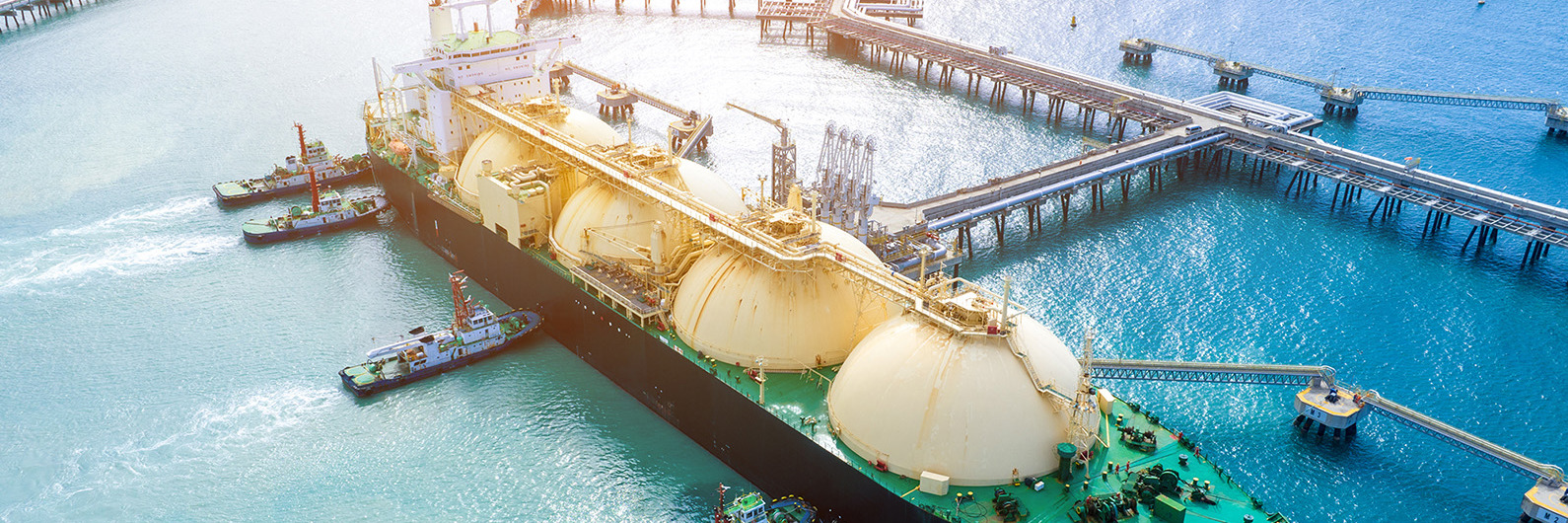
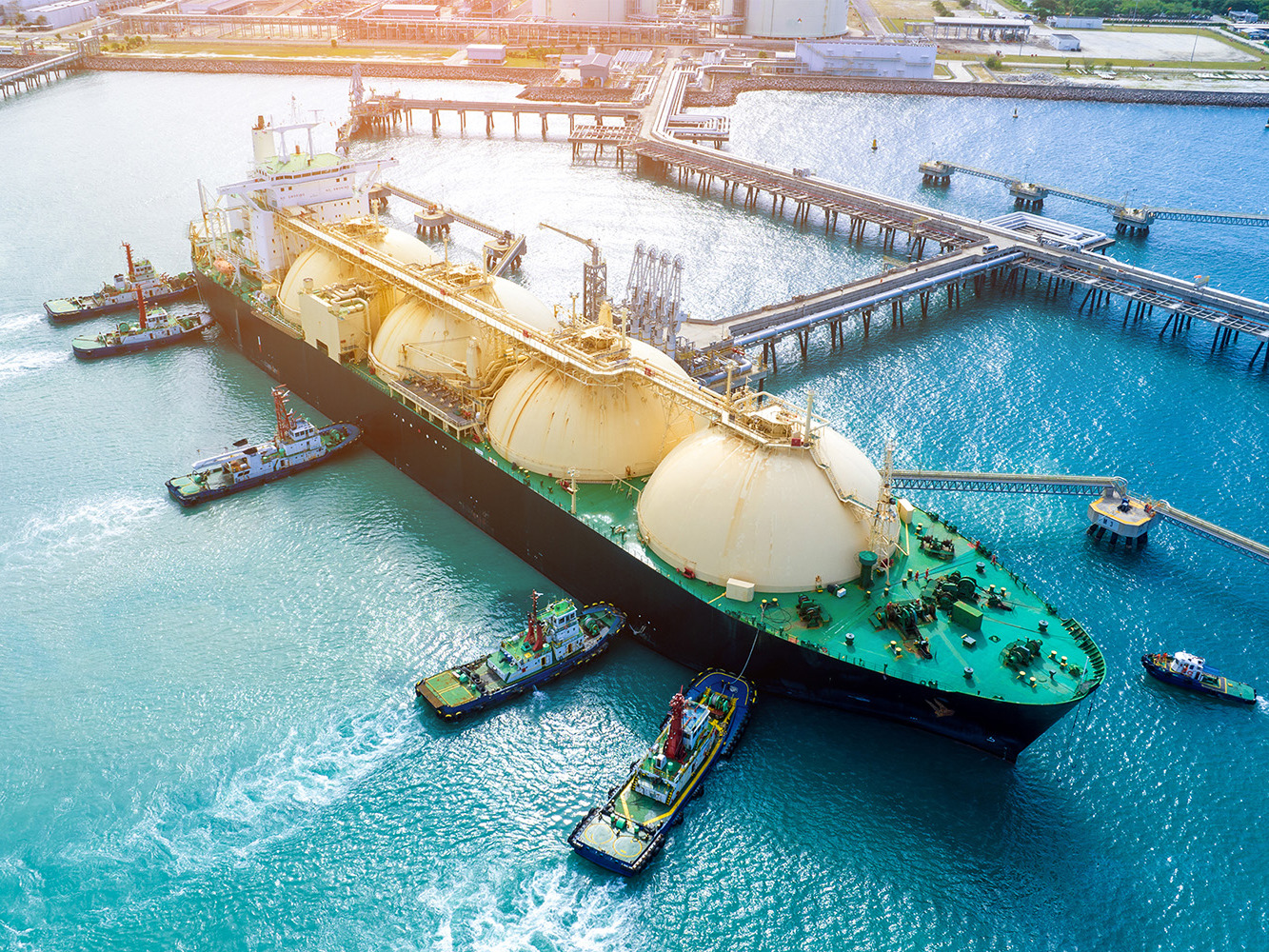
Since the Government’s confirmation last month that it plans to establish a liquefied natural gas (LNG) import facility, and Labour’s declared opposition to those plans, LNG is once again a hot topic. We covered key considerations for LNG importation when the Government first announced its intentions to remove regulatory barriers to import facilities. We now consider the Government’s announced plans in the context of recent developments in LNG supply, particularly in Australia.
What is planned for New Zealand’s LNG import facility?
The Government’s aim is for construction of an import facility that would be ready to receive LNG in 2027 or early 2028. The primary purpose of the facility is insurance against dry year risk. Consistent with that purpose, the model’s design will allow LNG to be imported in large shipments and only when needed. This will limit New Zealand’s exposure to global gas prices and allow new technologies to emerge as viable alternatives [1].
The Ministry of Business Innovation & Employment (MBIE) report to Cabinet stated that LNG will most likely be purchased on the spot market, which provides the desired flexibility in supply source and delivery timing but may entail a premium cost over and above the forward price market. Additional costs may be incurred if imports are sourced at a distance [2].
Global outlook for LNG supply
The International Energy Agency (IEA) published its quarterly Gas Market Report, Q1-2026 in late January. It notes that global LNG supply returned to double-digit growth in the second half of 2025 and is set to accelerate further in 2026 [3]. The IEA’s global LNG capacity tracker provides an up to date overview of LNG export capacity through to 2030. It describes the period between 2025 to 2030 as marking the largest wave of capacity additions to date.
With New Zealand’s import facility expected to come online in 2027-2028, it should coincide with a period of abundant global supply, which in turn should support more competitive pricing. Improving LNG availability is, however, likely to foster stronger gas demand growth. Recent events in the Middle East also illustrate how geopolitical tensions can quickly influence both supply and pricing.
Challenges in Australia
While Australia is our closest potential LNG supplier and has abundant gas reserves and resources, it is forecast to be at risk of structural supply shortfalls soon – from 2029 on the east coast and 2030 on the west coast according to a recent Gas Market Review Report [4]. How Australia responds to this risk may not only affect New Zealand’s chances of securing competitive LNG supply terms from Australia but also impact Australia’s own import terminal projects.
In December 2025, the Australian government announced it will develop a prospective gas reservation scheme to secure domestic supply while continuing to support LNG trade. Details of the scheme are yet to be developed, but it will require a portion of domestic production (likely to be between 15-25%) to be reserved for Australian gas users. The scheme is likely to take effect in early 2027 and could affect any contracts signed after 22 December 2025 [5]. Commentators have suggested that the proposal will impact Singapore and Thailand in particular, because they purchase limited volumes of LNG and lack long-term contracts [6]. The same could be said of New Zealand’s plans.
The imminent threat of shortfalls in the Australian east coast gas market has prompted further action. Ministers have sought advice on extending the powers of the Australian Energy Market Operator (AEMO) to support the market to proceed with necessary supply-side investments. In January 2026, the Australian Department of Climate Change, Energy, Environment and Water released a proposal [7] that envisages AEMO, as a last resort only, underwriting supply options (including LNG import terminals) that could meet a forecast shortfall. Notably, this follows a controversial proposal from the Victorian government last year that would have allowed the AEMO to underwrite the construction and operation of import terminals on Australia’s east coast, with the costs to be shared among states and recovered via consumer energy bills [8]. Consultation on the current AEMO underwriting proposal closed on 13 February. If approved, the new system could be implemented by the end of 2026.
There are four proposed LNG import terminals on Australia’s east coast. Squadron Energy’s Port Kembla gas import terminal in NSW is built but not yet operating. Three others are awaiting final investment decisions. Developers say that the gas reservation scheme has delayed talks on LNG imports by at least six months but imported gas will still be needed in the south-east due to logistical bottlenecks in transporting domestic gas via pipelines [9]. It remains to be seen if these projects will progress and how they might impact supplies of LNG from Australia (or elsewhere) to New Zealand.
If not Australia, then where?
New Zealand may need to look further afield for its LNG supplies, for example to the United States, Middle Eastern or South-East Asian LNG exporters. The IEA report suggests the United States’ share in the global LNG market is expected to increase from around 25% in 2025 to around 33% by the end of the decade. 2025 was the second strongest year on record for LNG liquefaction financial investment decisions and most of that new LNG capacity was in the United States [10]. US supply may, however, entail higher costs and logistical complexity.
What next for New Zealand?
For now, the focus is on procuring the import facility. The Government has shortlisted leading proposals for its construction and is progressing to commercial contracting. It aims to sign a contract by mid-2026. Further details on the procurement process and project milestones are yet to come. We also await drafting of the Enabling Liquified Natural Gas Bill which will be required to provide consents, approvals and levy powers. As the Cabinet paper states: “the timing is very tight from both a contractual and legislative viewpoint” [11].
Please get in touch with one of our energy experts if you would like to know more.
Footnotes
[1] See Beehive press release and the Cabinet paper setting out the case for proceeding with procurement
[2] Government Investment in Dry Year Risk Cover: Consideration of an LNG Import Facility, Annex 3, MBIE report “Exploring the case for LNG”, paras 69, 137
[3] Gas Market Report, Q1-2026, p.31
[4] Gas Market Review - Final Report, p.7
[5] The Australian Government’s Gas Market Review recommends domestic gas reservation policy | Department of Industry Science and Resources; Affordable gas for Australian homes and businesses | Ministers for the Department of Industry, Science and Resources
[6] Australia: LNG export restrictions could impact Singapore and Thailand.
[7] Proposed Extension of AEMO’s ECGS RSA Functions - Consultation Paper
[8] Gas import plan which would help Victoria, shelved as states consider options
[9] Gas reservation scheme fails to dent hopes of LNG importers
[10] Gas Market Report, Q1-2026, p.14
[11] *Government Investment in Dry Year Risk Cover: Consideration of an LNG Import Facility, para 47.